FrenchieCarePro logoFrenchieCarePro
    Diseases
    Dermatological

    Food Allergy in the French Bulldog

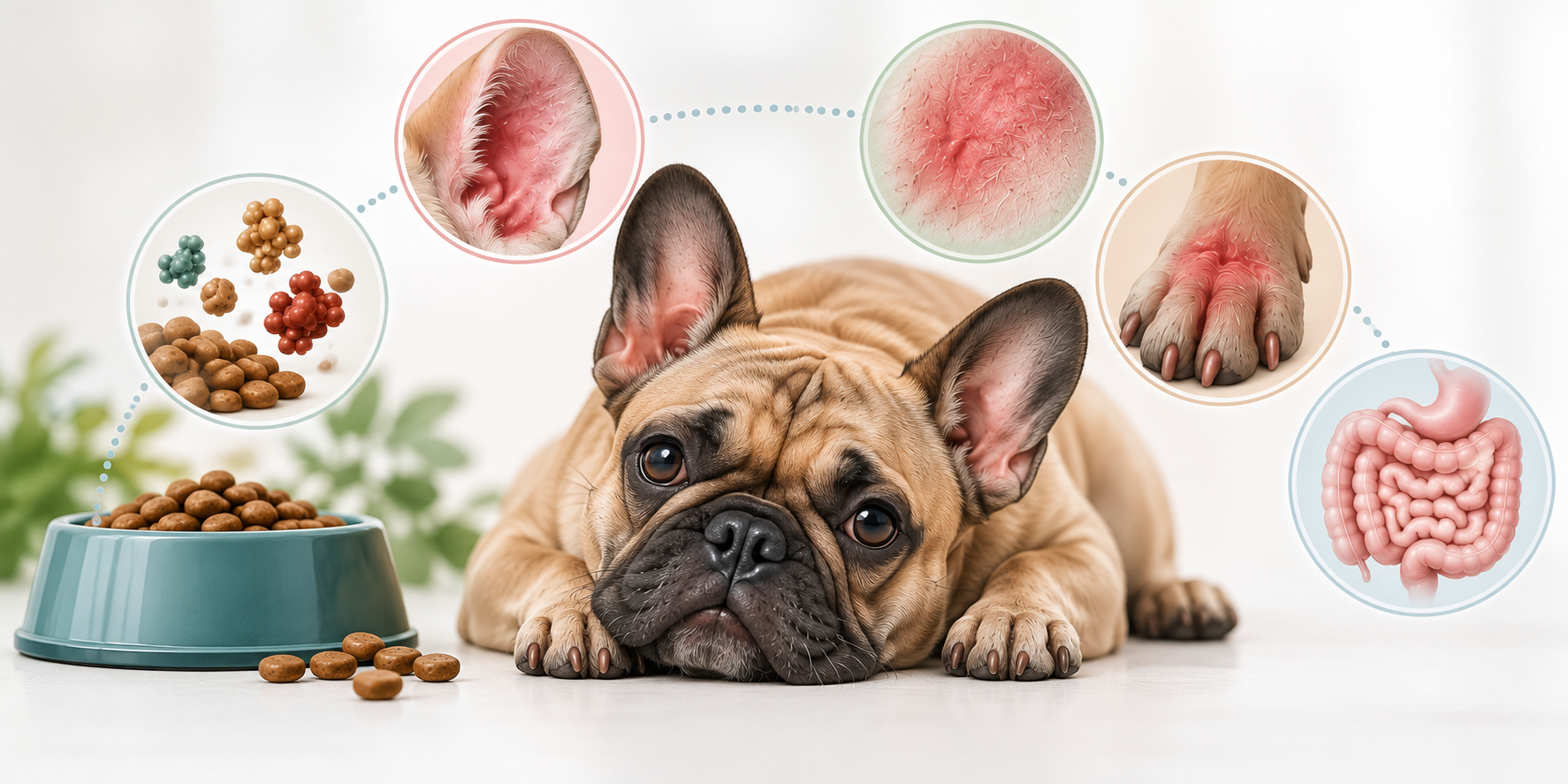
    Itching, recurrent ear problems and gastrointestinal signs can be associated with an adverse food reaction, but these signs alone are not enough to diagnose a food allergy.

    Link copied
    French Bulldog with possible signs associated with an adverse food reaction
    The information on this page is for educational purposes only and does not replace veterinary diagnosis, examination or treatment.

    What is food allergy in the French Bulldog?

    When a French Bulldog develops itching, recurrent ear problems or gastrointestinal signs, it is natural to wonder whether food could be involved. However, food allergy represents only one part of the possible reactions associated with food.

    The broader term is adverse food reaction: it describes a clinically abnormal response associated with eating a food or one of its components.

    In a true food allergy, the immune system is involved and reacts inappropriately to components of the food, generally proteins. Food intolerance, by contrast, does not necessarily involve an immune mechanism and may, for example, involve differences in digestion or metabolism.

    In practice, allergy and intolerance cannot be reliably distinguished by looking at symptoms alone. For this reason, when the underlying mechanism has not been demonstrated, “adverse food reaction” is often the more precise term.

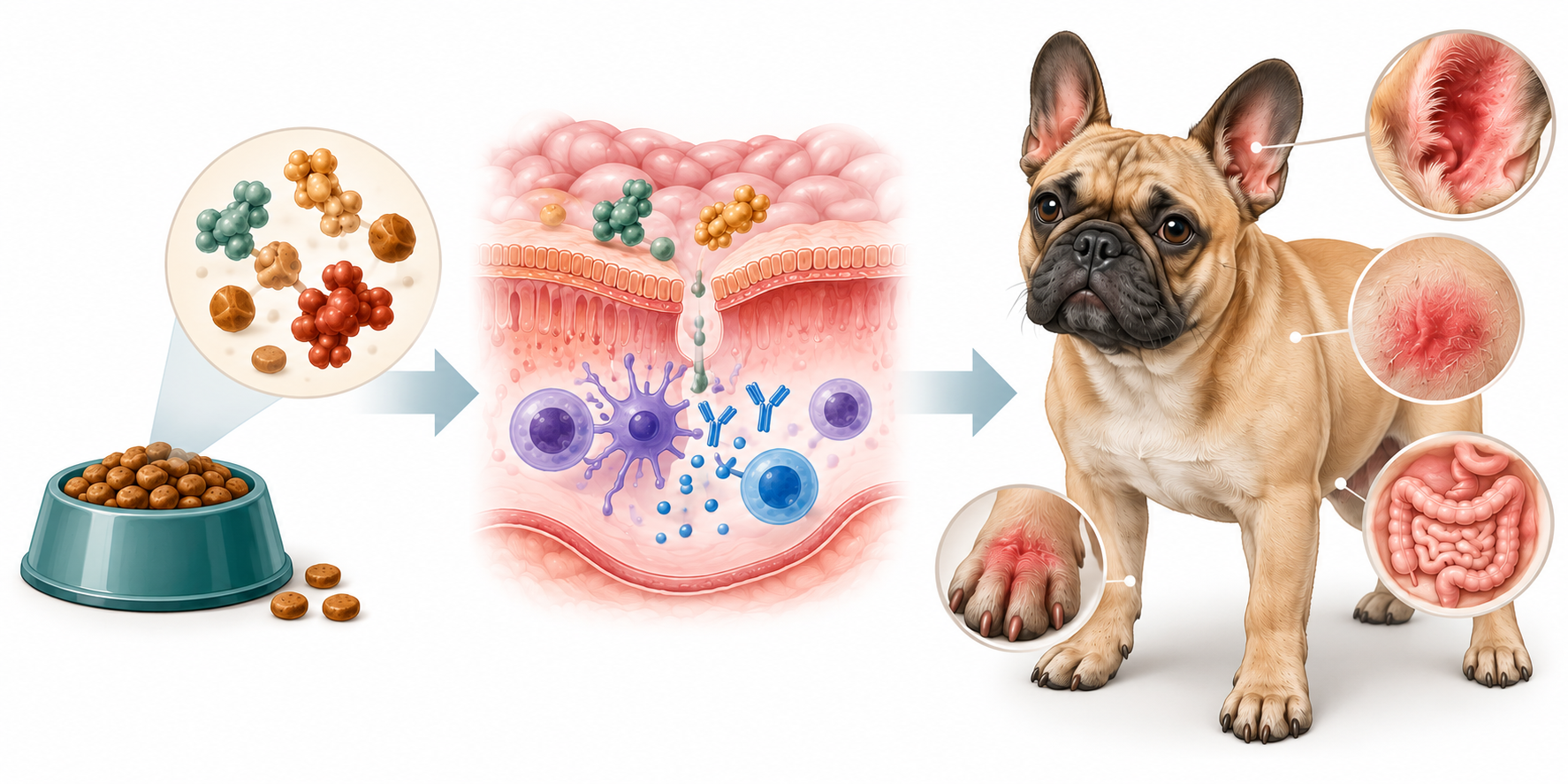
    What happens in the body?

    In a true food allergy, the immune system mistakenly recognizes certain food components, generally proteins, as a threat and develops a response against them.

    The manifestations do not necessarily affect only the intestine. Skin signs are common in dogs, and gastrointestinal signs may also occur. The skin, ears and gastrointestinal tract can be affected at the same time.

    Itching and ear problems, however, can have many other causes, including atopic dermatitis. Their presence alone therefore does not demonstrate that a dog has a food allergy.

    Tap the + to learn more

    Diagram of possible manifestations of an adverse food reaction in a French Bulldog

    It does not mean the food is poor quality

    A food allergy does not necessarily mean that the dog has eaten a poor-quality or “wrong” food. A dog can develop a reaction to a protein contained in a complete and nutritionally adequate diet.

    Marketing terms such as “premium”, “natural”, “grain-free” or “hypoallergenic” do not, by themselves, establish whether a food is suitable for an individual dog.

    Simply changing brands or independently choosing a food labelled “hypoallergenic” is not equivalent to carrying out a proper diagnostic process.

    In brief

    • “Adverse food reaction” is the broader term and includes reactions involving different mechanisms.
    • A true food allergy involves the immune system and generally protein components of food.
    • Signs may involve the skin, ears and gastrointestinal tract.
    • Itching, ear problems or diarrhoea alone do not demonstrate a food allergy.
    • Food quality, price or marketing labels do not by themselves determine allergy risk.
    • Reaching a diagnosis requires a controlled process with a veterinarian.

    Are French Bulldogs predisposed to food allergy?

    There is evidence that some dog breeds are represented more frequently than others among patients with food allergy. The Merck Veterinary Manual includes the French Bulldog among breeds that appear to be overrepresented in Western countries.

    This suggests that food allergy deserves particular consideration in French Bulldogs, but it does not mean that every Frenchie will develop the condition or allow the risk for an individual dog to be predicted.

    What we know

    The French Bulldog is among the breeds reported as being overrepresented in cases of food allergy, but breed predisposition is not a diagnosis and cannot reliably predict which individual dogs will develop the condition.

    Group of French Bulldogs representing individual variation in breed population studies

    What did a recent study of French Bulldogs find?

    A study published in 2025 analysed questionnaires concerning 574 French Bulldogs in Germany. Within this population, 281 of 574 dogs, approximately 49%, were reported as having food allergy or food hypersensitivity.

    This finding is important because it shows how frequently food-related problems were reported in this population of French Bulldogs. However, it should not be interpreted as evidence that 49% of all French Bulldogs have a true food allergy.

    View the study

    A figure that requires careful interpretation

    The study was based on an owner questionnaire and included diagnoses or suspected conditions reported in the dogs’ medical histories. Not every case was necessarily confirmed using the diagnostic approach considered most reliable for food allergy: a strict elimination diet followed by a controlled food challenge.

    The 49% figure therefore describes the population that was studied and should not be used as a confirmed prevalence of food allergy across the entire breed.

    In practice, breed may increase clinical suspicion when a Frenchie develops compatible signs, but diagnosis must always be based on the history and evaluation of the individual dog.

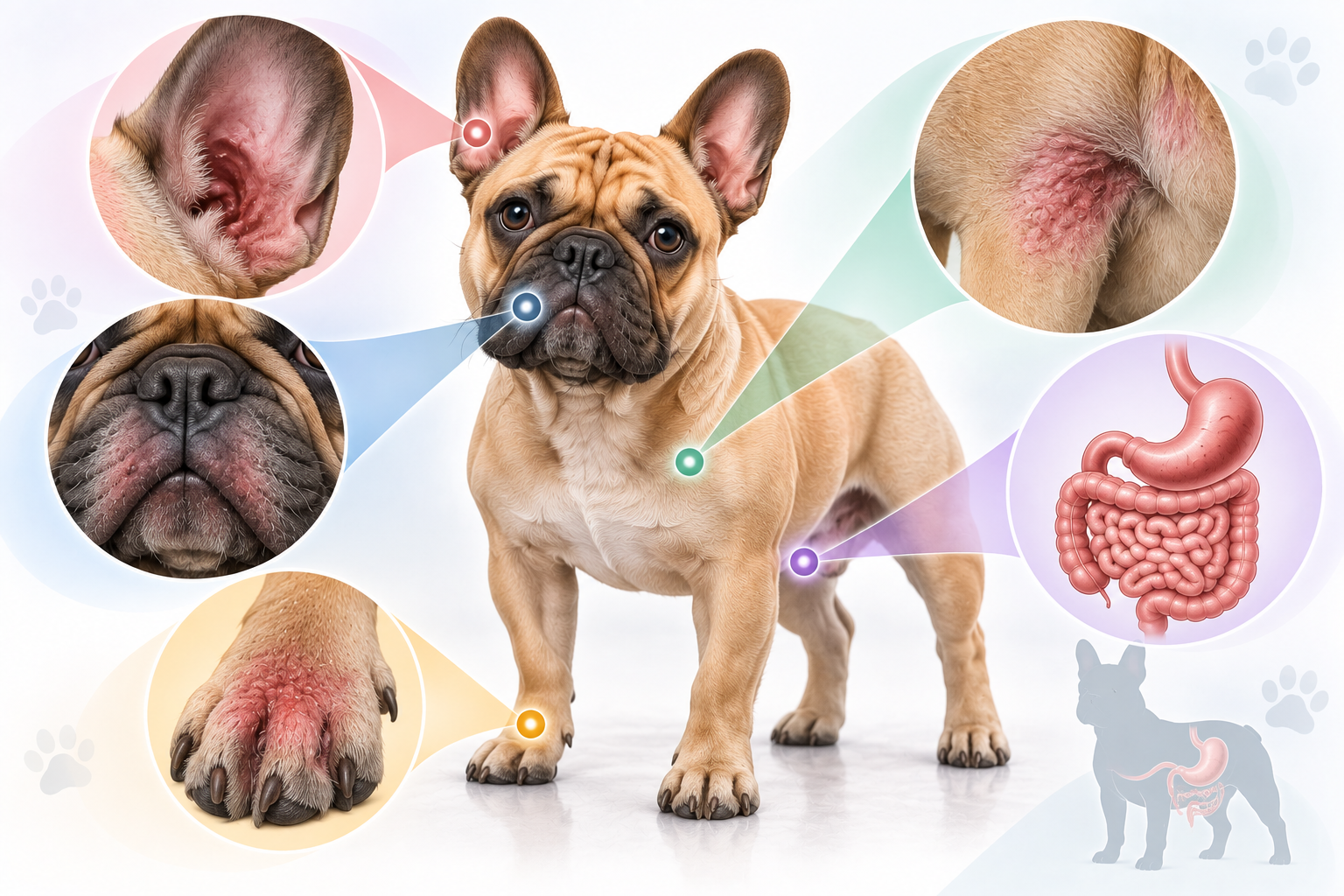
    Symptoms of food allergy in French Bulldogs

    Adverse food reactions can appear in different ways. In dogs, skin signs are common and pruritus is one of the most frequently reported manifestations, but gastrointestinal signs may also occur.

    The distribution of symptoms varies from dog to dog: some Frenchies mainly develop skin or ear problems, while others also show digestive signs.

    Tap the + to explore possible symptoms

    French Bulldog with illustrated details of possible skin, ear, paw and gastrointestinal signs associated with adverse food reactions

    How can the symptoms appear?

    Signs may be limited to the skin, limited to the gastrointestinal tract, or occur together. Their severity and combination can vary considerably between individual dogs.

    Itching

    It may be focal, multifocal or generalized.

    Recurrent ear infections

    They may occur with or without secondary infection.

    Paw licking

    This is often a response to itching and irritation.

    Redness and skin lesions

    Chronic scratching can contribute to alopecia, excoriations and skin changes.

    Secondary infections

    Bacterial and yeast overgrowth can complicate an existing dermatitis.

    Gastrointestinal signs

    Vomiting, diarrhea or subtler signs such as soft stools, flatulence or increased defecation frequency may occur.

    Symptoms alone are not enough for diagnosis

    None of these signs is specific to food allergy. Itching, otitis and dermatitis can also occur with environmental atopic dermatitis, parasites, infections and other conditions.

    AAHA guidelines emphasize that history and physical examination findings alone cannot reliably differentiate atopy from food allergy.

    For this reason, when a French Bulldog has persistent itching, recurrent otitis or skin disease, other possible causes should also be investigated before the signs are attributed to food.

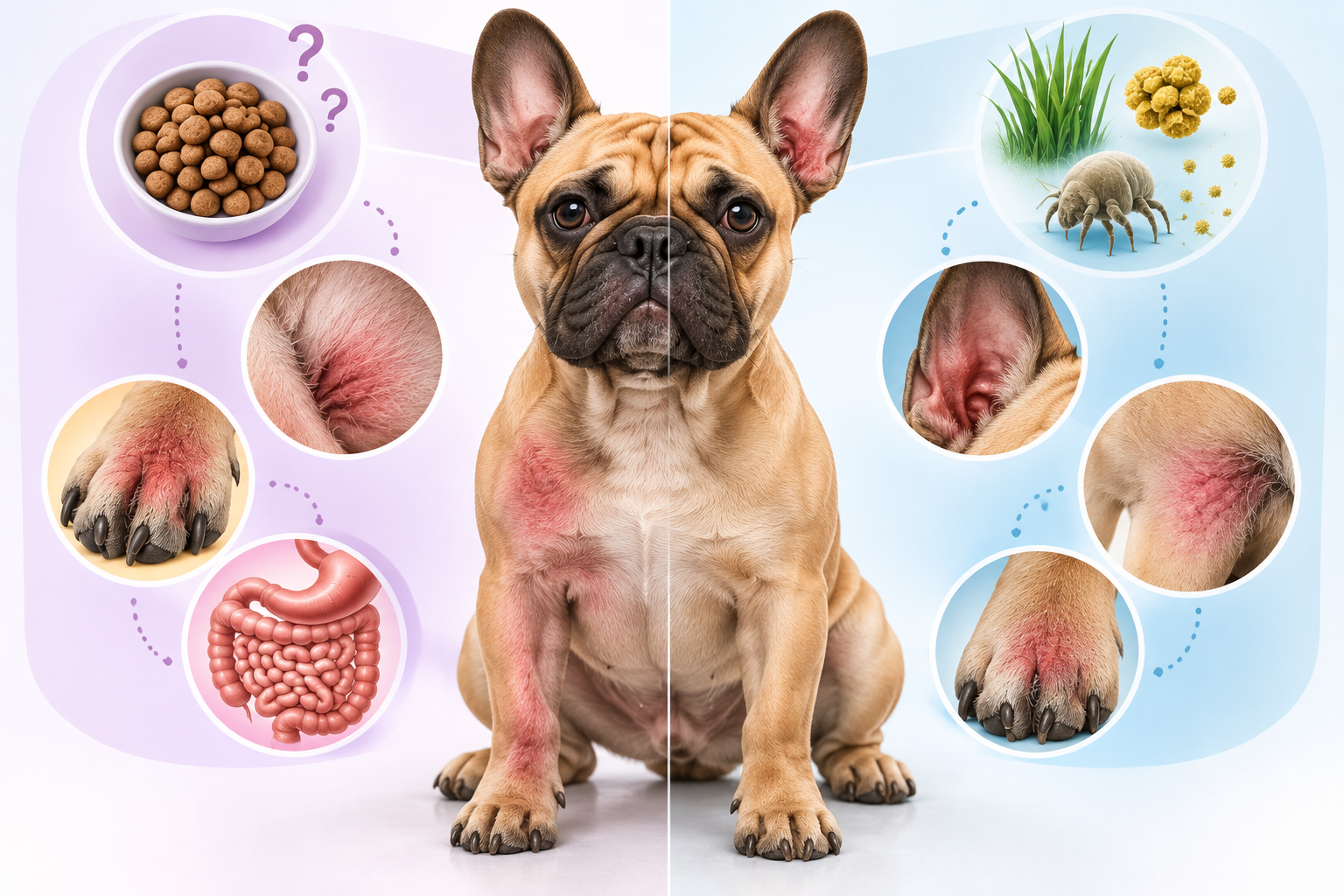
    Food allergy or atopic dermatitis?

    In French Bulldogs, food allergy and atopic dermatitis can look very similar. Itching, redness, paw problems and recurrent otitis may occur with either condition.

    For this reason, the appearance and distribution of skin lesions alone cannot determine whether the problem is food-related or caused by atopic dermatitis.

    Visual comparison between adverse food reaction and atopic dermatitis in a French Bulldog

    What can help guide suspicion?

    Adverse food reaction

    Skin and itching

    It can cause pruritus and dermatitis with a distribution similar to that seen in other allergic skin diseases.

    Ears and paws

    Otitis externa and paw involvement may occur, but these findings are not specific to a food-related cause.

    Gastrointestinal signs

    Some dogs may also have vomiting, diarrhea, soft stools, flatulence or increased frequency of defecation.

    How it is confirmed

    When food is suspected, diagnosis requires a strict diet trial and, if improvement occurs, a subsequent food challenge to confirm the role of the diet.

    Atopic dermatitis

    Skin and itching

    It is characterized by chronic pruritus and a typical distribution of skin lesions after other causes of itching have been excluded.

    Ears and paws

    The face, ears and paws are frequently affected, but these signs overlap with other allergic skin diseases.

    Environmental allergens

    It is generally associated with sensitization to environmental allergens and may show a seasonal or persistent pattern.

    How it is diagnosed

    Diagnosis is based on clinical history, compatible signs and exclusion of other causes of pruritus. Allergy testing alone does not diagnose atopic dermatitis.

    Why are they difficult to tell apart?

    AAHA guidelines emphasize that history and physical examination findings alone cannot reliably differentiate atopy from food allergy.

    Gastrointestinal signs may increase suspicion of an adverse food reaction, but they are not sufficient to confirm it.

    The two conditions can coexist

    A dog does not necessarily have only one cause of itching. An adverse food reaction may be present together with atopic dermatitis or other skin conditions.

    For this reason, the diagnostic workup should be systematic: control parasites and secondary infections, evaluate the clinical history and, when indicated, perform an elimination diet followed by a food challenge.

    To learn more about environmental allergy and the diagnostic approach to atopy, see the dedicated guide to atopic dermatitis in French Bulldogs.

    Atopic dermatitis

    How is food allergy diagnosed?

    Food allergy is not diagnosed with a single test. Because itching, otitis and dermatitis can have many causes, the veterinarian must follow a systematic process before attributing the signs to food.

    An elimination diet is the diagnostic reference standard, but its result must be interpreted within the entire clinical workup.

    1. 1. Clinical history and examination

      The veterinarian gathers information about when the signs started and how they have progressed, previous diets, treats, supplements and other food exposures, and performs a clinical and dermatologic examination.

    2. 2. Rule out other causes

      Parasites, bacterial or yeast infections, otitis and other dermatologic diseases can cause or worsen itching. These conditions should be considered and treated when present.

    3. 3. Elimination diet

      If an adverse food reaction remains a possible cause, a strict elimination diet is started under veterinary guidance.

    4. 4. Assess the response

      During the diet trial, the veterinarian evaluates whether itching, skin lesions, otitis or any gastrointestinal signs improve.

    5. 5. Food challenge

      If substantial improvement occurs during the diet trial, a controlled challenge with the previous diet or selected foods is performed. Recurrence of clinical signs confirms the role of food.

    Improvement during the diet is not enough

    Improvement during the diet ≠ confirmed diagnosis

    A dog may improve during an elimination diet for other reasons, for example because infections, parasites or other causes of itching have been controlled at the same time.

    For this reason, the Merck Veterinary Manual considers food allergy confirmed only when the dog improves on the diet and clinical signs recur after food challenge.

    Diagnosis therefore requires time, method and cooperation between the owner and veterinarian. Skipping steps can make it difficult to determine whether food is truly responsible for the signs.

    Next topic: the elimination diet.

    Elimination diet: how it really works

    An elimination diet is the central step when investigating whether a dog’s signs are food-related. To be diagnostically useful, however, it must be carefully selected and followed strictly.

    It is not simply a matter of changing brands or choosing a food marketed as “hypoallergenic”: the diet must be selected after considering everything the dog has previously eaten and should minimize exposure to potentially problematic food components.

    What type of diet can be used?

    Novel protein

    This uses a protein source that, as far as possible, the dog has not eaten before. Careful dietary history is essential because a previously consumed protein is not truly “novel” for that dog.

    Hydrolyzed protein

    Proteins are broken into smaller fragments to reduce the likelihood that the immune system will recognize and react to them. The degree of hydrolysis varies between diets.

    Elemental diet

    Some diets use free amino acids instead of intact proteins. They may be considered in selected cases under veterinary guidance.

    The choice between novel, hydrolyzed and elemental diets should be individualized according to the dog’s dietary history, clinical situation and veterinary guidance.

    The most important rule: it must be exclusive

    During the trial, the dog should receive only the prescribed trial diet. Even small amounts of other foods can make the result difficult to interpret.

    What can compromise the trial?

    • Treats that are not compatible with the trial diet
    • Table scraps
    • Food-based chews or rawhide
    • Pill pockets or foods used to hide medication
    • Flavored supplements
    • Flavored chewable medications or preventives
    • Flavored toys or other food-containing products
    • Access to another pet’s food
    • Food picked up during walks or around the home
    • Unrecognized food sources or contamination

    Even seemingly minor products may contain food proteins or flavorings. Medications, supplements, treats and chews should therefore be discussed with the veterinarian during the trial.

    How long should it last?

    The duration depends on the type of clinical signs and the individual dog. In patients with dermatologic signs, diet trials generally require several weeks and are often conducted for approximately 8–12 weeks.

    There is no single duration that applies to every patient: the veterinarian may adapt the protocol according to clinical response, concurrent treatments and the overall case.

    Stopping the diet too early can make the result difficult to interpret.

    Changing brands is not the same as an elimination diet

    Simply switching from one commercial food to another does not necessarily eliminate proteins the dog has previously encountered and may not provide sufficient ingredient control.

    For a true diagnostic trial, AAHA recommends particular caution with over-the-counter diets because undeclared ingredients have been detected in some products and may interfere with the result. If an OTC diet is used for practical or financial reasons, its limitations should be considered.

    What about a home-prepared diet?

    A home-prepared diet may be used in some elimination protocols, but it requires careful planning. If it is used for an extended period, it should be formulated to be nutritionally adequate with support from a veterinarian or a qualified veterinary nutrition professional.

    An improvised recipe containing only a few ingredients should not automatically be considered complete and balanced.

    An elimination diet works as a diagnostic test only when it is appropriately selected and followed with great precision. If the signs improve, the next step is not to immediately conclude that the dog is allergic: the response must be verified with a controlled food challenge.

    Food challenge: the step that confirms the diagnosis

    If a French Bulldog improves during an elimination diet, the result is important, but it is not yet enough to confirm food allergy.

    To verify that the improvement is truly related to food, a controlled food challenge, also called a rechallenge, is performed.

    1. 1. Improvement during the diet

      The dog shows a substantial reduction in clinical signs while strictly following the elimination diet.

    2. 2. Controlled reintroduction

      Under veterinary guidance, the previous diet or a previously consumed food source is reintroduced.

    3. 3. Watch for recurrence of signs

      If itching, otitis, skin lesions or other compatible signs recur during the challenge, the role of food is confirmed.

    What does the result mean?

    The signs return

    A relapse after food is reintroduced, following improvement on the elimination diet, confirms a clinically relevant adverse food reaction.

    The signs do not return

    If the dog does not worsen during rechallenge, the improvement seen during the diet may not have been caused by food. The Merck Veterinary Manual states that these patients are not considered food allergic on the basis of improvement during the diet trial alone.

    How quickly can the signs return?

    The response is not identical in every dog. Increased itching or other clinical signs may appear within hours or a few days after food is reintroduced.

    In some patients, however, a positive response may take up to approximately 10–14 days to become apparent.

    The challenge should therefore be observed for long enough and should not be considered negative too quickly.

    What happens if the signs return?

    If clinical signs recur during rechallenge, the dog is generally returned to the elimination diet until stable again.

    When useful and practical, the veterinarian may later recommend separate challenges with individual ingredients or other food sources to help identify specific triggers.

    Identifying every individual ingredient is not always necessary or practical. In some cases, finding a complete and balanced diet that the dog tolerates is sufficient.

    The food challenge is therefore the step that distinguishes simple improvement during a diet from a genuinely supported diagnosis. To be interpretable and safe, it should be planned with the veterinarian and considered within the entire diagnostic process.

    Blood, saliva, hair and other tests: are they reliable?

    When a dog has itching, recurrent otitis or gastrointestinal signs, it may seem much easier to use a test that directly identifies which foods should be avoided. At present, however, no blood, saliva or hair test is considered sufficiently reliable to diagnose food allergy in dogs on its own.

    The main problem is that the test result does not necessarily correspond to what actually happens when the dog eats that food.

    Blood tests

    Not diagnostic

    Serologic tests measuring antibodies against foods, including IgE-based tests, do not show sufficiently reliable correlation with the dog’s clinical reaction.

    Saliva tests

    Not diagnostic

    Measurement of food-specific antibodies in saliva has not proved sufficiently reliable to consistently distinguish food-allergic dogs from non-allergic dogs.

    Hair analysis

    Not diagnostic

    Hair analysis has been proposed and marketed to identify food sensitivities, but there is insufficient evidence that it can reliably diagnose true food allergy.

    Intradermal testing

    Not diagnostic for food allergy

    Intradermal skin testing is mainly used in the context of environmental allergies and is not considered a reliable method for diagnosing food allergy.

    Patch testing

    May have a limited role

    Some studies suggest that patch testing may help in selected cases to choose foods for an elimination diet, but it is not sufficient on its own to diagnose food allergy.

    Test ≠ diagnosis

    A positive result does not necessarily mean that the dog will develop clinical signs when eating that food.

    Likewise, a negative result does not necessarily guarantee clinical tolerance.

    These results should therefore not be used alone to decide that a dog is allergic to one or more ingredients.

    Can these tests still be useful in some situations?

    Some methods may have a complementary role in specialist settings. The Merck Veterinary Manual notes, for example, that certain serologic assays and patch testing may sometimes help select foods to consider for a subsequent elimination diet.

    This is very different from directly diagnosing food allergy: the result still needs to be verified through the dog’s clinical response.

    A test may help guide diet selection, but it does not replace an elimination trial and food challenge.

    Allergy testing used for environmental allergens serves a different purpose and should not be confused with diagnosis of food allergy.

    What is the reliable diagnostic method?

    The diagnostic reference standard remains a strict elimination diet followed by a controlled food challenge.

    The diagnosis is supported when clinical signs improve during the diet and recur after the previous food or diet is reintroduced.

    Elimination diet + food challenge = diagnostic reference standard

    If a test is offered that claims to “identify all foods the dog is allergic to” from a simple blood, saliva or hair sample, its results should be interpreted cautiously and discussed with a veterinarian before multiple foods are removed from the diet.

    Which foods are most often implicated?

    In dogs with adverse food reactions, some food sources are reported more frequently than others. Beef, dairy, chicken, wheat and lamb are among those most commonly described in the veterinary literature.

    This list must be interpreted cautiously: it does not mean that these foods are “bad” or that they cause allergy in most dogs.

    Food sources reported more frequently

    Beef

    Beef is one of the protein sources most frequently reported in published cases of adverse food reaction in dogs.

    Dairy

    Milk proteins have been described among the food sources involved in some dogs with adverse food reactions.

    Chicken

    Chicken is frequently reported, but this does not mean that it should be automatically avoided in dogs that tolerate it.

    Wheat

    Wheat has been reported in some cases, but the presence of grain in a diet does not automatically mean that a dog is allergic to grains.

    Lamb

    Lamb is also among the food sources described in the veterinary literature.

    More frequently reported does not necessarily mean more allergenic

    How often an ingredient is identified in studies is also influenced by how commonly that food is fed in the general dog population.

    An ingredient consumed by many dogs has more opportunities to appear among reported adverse food reactions.

    These lists should therefore not be interpreted as an absolute ranking of the allergenic potential of different foods.

    Should chicken and grains be avoided?

    No, not preventively. A dog that tolerates chicken or grains does not benefit from automatically excluding them simply because an ingredient has a reputation for causing allergy.

    Food elimination should serve a specific diagnostic or therapeutic purpose and should be based on the individual dog’s dietary history and clinical response.

    Can a different food also be involved?

    Yes. Adverse food reactions can also occur with food sources that are reported less frequently. In practice, virtually any dietary protein may potentially be involved.

    This is why elimination diets are selected according to what the dog has previously eaten rather than simply avoiding the most frequently discussed ingredients.

    Grain-free ≠ hypoallergenic

    A grain-free food is not automatically hypoallergenic.

    If it contains a protein source to which the dog reacts, removing grains does not make that diet appropriate for that patient.

    Likewise, the presence of grains does not mean that the food is responsible for the clinical signs.

    The goal is not to create a universal list of “safe” and “dangerous” ingredients, but to identify through a diagnostic process which foods the individual dog tolerates and which, if any, trigger recurrence of signs.

    Hydrolyzed or novel protein?

    Different strategies can be used in elimination diets. Two of the most common are using a protein source that is novel for that individual dog or using hydrolyzed proteins.

    The choice does not depend on which option is universally “better”, but on the individual patient's dietary history and clinical situation.

    Novel protein

    A source that this dog has not eaten before

    A protein is truly “novel” only if the dog has not previously been exposed to that food source.

    • Dietary history is essential

      Previous diets, treats, rewards and other food sources need to be reviewed carefully.

    • The concept is individual

      A protein that is new for one dog may have been eaten many times by another. There is therefore no universally “novel” protein.

    • Ingredient control

      For a diagnostic trial, the selected diet should allow sufficiently strict control of the food sources being consumed.

    Hydrolyzed protein

    Proteins broken into smaller components

    In hydrolyzed diets, proteins are broken into smaller peptides with the aim of reducing recognition by the immune system.

    • Degree of hydrolysis varies

      Hydrolyzed diets are not all identical: the protein source and degree of hydrolysis may differ between formulations.

    • It does not mean zero risk

      Hydrolysis reduces the likelihood of immune recognition, but some dogs may still react to certain hydrolyzed diets.

    • More extensive hydrolysis

      In some patients, formulations containing more extensively hydrolyzed proteins may be considered under veterinary guidance.

    There is no single best choice for every dog

    A novel-protein diet may be appropriate when the dietary history allows a genuinely new protein source to be identified with reasonable confidence.

    A hydrolyzed diet may be particularly useful when the dietary history is complex, many protein sources have already been fed or identifying a truly novel protein is difficult.

    The choice must still be individualized: neither “novel” nor “hydrolyzed” alone guarantees a successful trial.

    How is the most appropriate diet selected?

    The veterinarian considers several factors before establishing the trial.

    1. What the dog has previously eaten

    Previous diets, treats, chews, supplements and other food exposures help determine which proteins the dog has already encountered.

    2. Previous diet trials

    The response to any previous elimination diets may influence the choice of the next protocol.

    3. Clinical situation

    Clinical signs, concurrent conditions and the individual dog's nutritional needs should be considered together with the diagnostic objective.

    4. Ability to follow the diet strictly

    A theoretically appropriate diet loses diagnostic value if it cannot be fed exclusively and consistently.

    The correct approach is therefore not to search for the “least allergenic” protein, but to design a diagnostic trial that fits the individual dog's history and is sufficiently controlled to produce an interpretable result.

    When an elimination diet does not give a clear answer

    Not every diet trial produces a clear-cut result. A dog may improve only partially, continue to itch or show a clinical course that is difficult to interpret.

    This does not automatically mean that the elimination diet has ruled out an adverse food reaction. Before considering the trial negative, it is important to determine whether other factors may have influenced the result.

    Unrecognized food exposures

    Even small exposures to food sources outside the prescribed diet can interfere with interpretation of the trial. As discussed in the elimination-diet section, treats, chews, flavored products, food belonging to other animals and other sources may easily be overlooked.

    Diet not suitable for the trial

    A protein described as “novel” may actually have been eaten previously, or the selected diet may not provide sufficiently strict ingredient control for a diagnostic trial.

    Trial too short or insufficiently strict

    Dermatologic signs may require several weeks before an interpretable response becomes apparent. Interruptions, frequent changes or non-exclusive feeding can make the result unreliable.

    Secondary infections or parasites

    Bacterial or yeast infections, otitis and parasites can maintain or increase itching even while a food-related component is improving. These problems need to be identified and managed as part of the diagnostic process.

    More than one cause of itching

    Food allergy and atopic dermatitis can coexist. A dog affected by both may improve with the diet without becoming completely free of clinical signs.

    Concurrent treatments

    Antipruritic medication, treatment of infections and other therapies can alter clinical signs during the trial. This does not mean that they should be discontinued: the veterinarian must take them into account when interpreting the response.

    Partial improvement can be meaningful

    Failure of itching to disappear completely does not automatically exclude a food-related component.

    If another allergic disease or condition is contributing to the itching at the same time, the diet may improve only part of the clinical picture.

    In these cases, a food challenge can be particularly informative: recurrence or worsening of signs after food is reintroduced may demonstrate that diet contributes to the problem even if the dog did not become completely asymptomatic during the trial.

    Before considering the trial unsuccessful

    When the result is unclear, the veterinarian may reassess several fundamental points.

    • Was the selected diet genuinely appropriate for the dog's dietary history?
    • Was the diet fed exclusively and with sufficient consistency?
    • Was the trial continued for an appropriate period for the clinical condition?
    • Are infections, parasites or other causes of itching present?
    • Could atopic dermatitis or another disease be present at the same time?
    • Could treatments used during the trial have altered the course of the clinical signs?

    This reassessment should be performed with the veterinarian. Diets and treatments should not be prolonged, stopped or modified independently in an attempt to “test” the dog.

    An unclear diet trial should not be interpreted too quickly. Determining whether the result reflects diet selection, adherence, other diseases or several concurrent causes of itching is an integral part of the diagnostic process.

    Treatment and long-term management

    Once an adverse food reaction has been identified through an appropriate diagnostic process, long-term management mainly consists of avoiding the food sources that trigger recurrence of clinical signs.

    The goal is not to eliminate as many ingredients as possible, but to establish a diet that the individual dog tolerates while adequately meeting its nutritional requirements.

    1. Avoid identified triggers

    Foods that caused a relapse during a controlled challenge are generally excluded from the dog's diet. Ingredients that the dog tolerates do not need to be automatically eliminated.

    2. Maintain a complete and balanced diet

    The long-term diet should provide all necessary nutrients in appropriate amounts. Unnecessary dietary restrictions can make it more difficult to provide balanced nutrition.

    3. Manage skin and ears

    Otitis and bacterial or yeast skin infections may accompany allergic disease and require specific management when present. Dietary control does not replace treatment of these conditions.

    4. Manage concurrent disease

    An adverse food reaction can coexist with atopic dermatitis or other causes of itching. In these dogs, dietary control may improve only part of the clinical signs and additional management may be required.

    Diagnostic diet ≠ necessarily the permanent diet

    The diet used during the trial has a diagnostic purpose: to control food exposures and allow the dog's response to be interpreted.

    After tolerated foods and foods that trigger relapse have been identified, the veterinarian can assess which diet is most appropriate for long-term maintenance.

    Some dogs may remain on the same diet, while others may transition to a different diet provided it is complete, balanced and compatible with the identified adverse food reactions.

    What if itching, otitis or skin problems remain?

    Persistence of some clinical signs does not necessarily mean that dietary management has failed.

    The dog may also have atopic dermatitis, secondary infections, parasites or another condition contributing to the clinical picture.

    The veterinarian may therefore need to reassess other possible causes and determine whether specific treatment is needed for itching, infections, the ears or concurrent diseases.

    Do not independently change or discontinue medications or treatments in an attempt to determine whether the diet is “working”. Treatment changes should be agreed with the veterinarian.

    Can management change over time?

    Yes. A dog's nutritional and clinical needs may change with age, weight, activity level or the development of other conditions.

    Periodic veterinary reassessment can help determine whether the diet remains nutritionally appropriate and whether clinical signs remain adequately controlled.

    If new foods, treats or supplements are introduced, it is useful to keep track of their ingredients, particularly in dogs with an identified adverse food reaction.

    Good long-term management is not about making the diet increasingly restrictive, but about using the fewest restrictions necessary to control the food-related component while maintaining complete, balanced and sustainable nutrition for that dog.

    Food allergy, otitis and dermatitis

    In dogs, an adverse food reaction may manifest primarily through skin problems and, in some patients, may also involve the ears. In French Bulldogs this can create a difficult clinical picture to interpret because itching, redness, paw problems and recurrent otitis can also occur with other allergic diseases.

    Skin and ears should therefore be considered as parts of the same clinical picture without automatically attributing the signs to diet.

    Adverse food reaction

    Adverse food reaction

    May contribute to dermatologic signs

    Skin

    Itching, redness, skin lesions, paw licking and secondary infections may be part of the clinical picture.

    Ears

    Otitis externa, including recurrent episodes, may occur in dogs with adverse food reactions.

    Related signs, but not specific

    Itching, dermatitis and otitis alone cannot distinguish an adverse food reaction from atopic dermatitis or other causes.

    Their presence increases the need for a systematic diagnostic approach but does not demonstrate that a particular food is responsible.

    Related guides

    Atopic dermatitis

    Atopic dermatitis can produce a very similar clinical picture, with itching and frequent involvement of the face, ears and paws. It may also coexist with an adverse food reaction.

    Learn more about atopic dermatitis

    Otitis

    Otitis externa may be associated with allergic disease but requires specific examination of the ears. Bacterial or yeast infections can contribute to the clinical signs and may require dedicated treatment.

    Learn more about otitis

    When itching, skin problems and recurrent otitis occur together, the goal is not to immediately choose between “food” and “atopy”, but to identify all components contributing to the clinical signs and manage them appropriately.

    How to use the Food Center if your dog has a food allergy

    The FrenchieCarePro Food Center provides general information about many foods and their safety for dogs. However, when an adverse food reaction is suspected or confirmed, this information must be interpreted in the context of the individual dog.

    “Safe for dogs” does not mean “suitable for your dog”

    A food may be generally safe for most dogs while still being inappropriate for a dog undergoing an elimination diet or reacting to a specific ingredient.

    General food safety and individual tolerance are two different considerations.

    How the Food Center can help

    Understand a food better

    It can help you learn about the general characteristics of a food, parts that may need to be avoided, preparation methods and general safety considerations.

    Understand the limits of general information

    A food profile cannot determine whether your dog is allergic or intolerant to that ingredient and cannot replace a veterinary diagnostic process.

    Have more informed discussions with your veterinarian

    General information can help you better understand ingredients and discuss your dog’s diet with your veterinarian, particularly during a diagnostic work-up.

    During an elimination diet

    If your dog is undergoing a diet trial, even a food that is normally considered safe may compromise the result if it is not part of the diet selected for the protocol.

    During this period, follow the plan agreed with your veterinarian and do not add ingredients based solely on information from the Food Center.

    The Food Center can therefore be a useful educational resource, but food choices for a dog with a suspected or confirmed adverse food reaction must always be considered in the context of that individual dog.

    What not to do if you suspect a food allergy

    When a dog develops itching, recurrent ear problems or gastrointestinal signs, it is understandable to want to change the diet immediately. However, some very common approaches can make it harder to determine whether food is actually contributing to the problem.

    Do not keep switching foods

    Moving rapidly from one diet to another without a defined protocol can make improvements or relapses difficult to interpret. A diet trial should be planned and followed consistently.

    Do not treat a commercial test as a diagnosis

    Blood, saliva, hair or other commercial tests cannot, on their own, reliably confirm or rule out a clinically relevant food allergy.

    Do not eliminate ingredients at random

    Chicken, grains, beef or other ingredients often discussed in relation to allergies should not automatically be avoided if the dog tolerates them. What should be eliminated depends on dietary history and the diagnostic protocol.

    Do not confuse “grain-free” with “hypoallergenic”

    The absence of grains does not automatically make a diet suitable for a dog with a food allergy. A grain-free diet may still contain proteins or other ingredients that trigger an individual dog.

    Do not improvise a homemade diet

    A home-prepared diet may be used in some protocols, but an improvised recipe is not automatically complete and balanced. If used for a prolonged period, it should be planned with appropriate veterinary or veterinary nutrition guidance.

    Do not treat improvement alone as confirmation

    A dog may improve after a diet change for reasons unrelated to food allergy. This is why, when appropriate, a food challenge is important to determine whether the improvement is truly linked to the diet.

    A structured process is more useful than random trial and error

    The goal is not to find “the perfect food” as quickly as possible, but to obtain reliable information. A careful dietary history, a well-controlled elimination diet and a subsequent food challenge, when appropriate, provide far more useful information than a series of unplanned food changes.

    If an adverse food reaction is genuinely suspected, the most useful approach is a structured plan developed with your veterinarian and followed consistently.

    When to see a veterinarian

    Occasional itching, ear problems or gastrointestinal signs do not automatically indicate a food allergy. When signs persist, recur or affect your dog’s wellbeing, it is important to determine what is actually causing them.

    Book a veterinary appointment

    Persistent or recurrent itching

    Itching that continues or frequently returns deserves evaluation, particularly if your dog scratches, licks or chews enough to irritate the skin.

    Recurrent ear problems

    Repeated episodes of otitis can be associated with allergic disease, but they can also have other contributing factors. The cause should be assessed before attributing them to food.

    Skin lesions or infections

    Persistent redness, hair loss, crusting, skin lesions or bacterial and yeast infections should be evaluated and may themselves contribute to itching.

    Recurrent gastrointestinal signs

    Vomiting, diarrhoea, soft stools or other gastrointestinal problems that repeatedly occur deserve clinical assessment because they can have many different causes.

    Weight loss or changes in general wellbeing

    Unintentional weight loss, reduced appetite or a clear change in general wellbeing should not automatically be attributed to a food allergy.

    Why is an assessment important?

    Signs of an adverse food reaction overlap with many other conditions. Your veterinarian can review the clinical history, investigate other causes of itching or gastrointestinal disease, identify secondary infections and determine whether a diet trial is appropriate.

    If previous food changes have produced an unclear response, a structured reassessment is generally more useful than continuing to switch diets without a defined protocol.

    When more immediate care may be needed

    Do not wait if your dog develops significant or sudden signs

    Severe or persistent vomiting or diarrhoea, blood, marked weakness or a rapid deterioration in general condition may require more prompt veterinary assessment.

    Difficulty breathing, collapse or sudden significant swelling of the muzzle or face requires urgent veterinary attention.

    These signs do not prove that your dog has a food allergy and can result from many other conditions. When acute or severe signs occur, the priority is to have the dog assessed rather than trying to identify a possible food ingredient yourself.

    When signs become persistent, recurrent or significant, veterinary assessment can help move from suspicion to a more rational and safer diagnostic process.

    Frequently asked questions about food allergy in French Bulldogs

    Adverse food reactions can be difficult to recognise because many signs overlap with other skin and gastrointestinal conditions. These are some of the most common questions.

    If signs persist or the dietary process produces unclear results, reassessing the case with your veterinarian is more useful than continuing to switch foods without a defined protocol.

    Scientific sources

    This guide was developed using veterinary reference manuals, clinical guidelines and peer-reviewed scientific literature. The main sources used for the medical content are listed below.

    Main references

    1. 1.Cherie M. Pucheu-Haston, DVM, PhD, DACVD. Cutaneous Food Allergy in Animals (Adverse Food Reactions). Merck Veterinary Manual — Professional Version.

      Full review/revision August 2025

      Open source
    2. 2.Nutrition in Disease Management in Small Animals. Merck Veterinary Manual — Professional Version.

      Open source
    3. 3.American Animal Hospital Association (AAHA). 2023 AAHA Management of Allergic Skin Diseases in Dogs and Cats Guidelines. American Animal Hospital Association.

      2023

      Open source
    4. 4.Olivry T, DeBoer DJ, Favrot C, Jackson HA, Mueller RS, Nuttall T, Prélaud P. Treatment of canine atopic dermatitis: 2015 updated guidelines from the International Committee on Allergic Diseases of Animals (ICADA). BMC Veterinary Research.

      2015;11:210 · DOI: 10.1186/s12917-015-0514-6

      Open source
    5. 5.Olivry T, Mueller RS, Prélaud P. Critically appraised topic on adverse food reactions of companion animals (1): duration of elimination diets. BMC Veterinary Research.

      2015;11:225 · DOI: 10.1186/s12917-015-0541-3

      Open source
    6. 6.Mueller RS, Olivry T, Prélaud P. Critically appraised topic on adverse food reactions of companion animals (2): common food allergen sources in dogs and cats. BMC Veterinary Research.

      2016;12:9 · DOI: 10.1186/s12917-016-0633-8

      Open source
    7. 7.Hinze MAG, Meyer KO, Heilmann RM, Müller U. Health status and disease prevalences in French bulldogs in Germany: insights from a survey-based study. Companion Animal Health and Genetics.

      2025;12:9 · DOI: 10.1186/s40575-025-00149-8

      Open source
    8. 8.Testing for food-specific antibodies in saliva and blood of food allergic and healthy dogs. The Veterinary Journal.

      2019;245:1–6 · PMID: 30819419

      Open source
    9. 9.Udraite Vovk L, Mueller RS. Adverse Food Reactions in Dogs and Cats. Veterinary Clinics of North America: Small Animal Practice.

      2026;56(3):579–589 · PMID: 41391959

      Open source

    Important information

    This guide is for informational and educational purposes only and does not replace diagnosis, examination or advice from a veterinarian. If your dog has symptoms, persistent problems or a worsening condition, contact your veterinarian. If severe or sudden signs develop, seek prompt veterinary care.