FrenchieCarePro logoFrenchieCarePro
    Diseases
    Diseases Center
    👂 Auricular
    Vet visit

    Otitis in the French Bulldog

    Otitis · Ohrenentzündung · Otitis · Otite

    Otitis is an inflammation of the ear that can cause itching, pain, redness, unpleasant odour, and discharge. In the French Bulldog it is often associated with allergies, moisture, changes in the ear canal, or yeast and bacterial overgrowth. Early veterinary diagnosis is important to identify the cause and choose the right treatment.

    Link copied
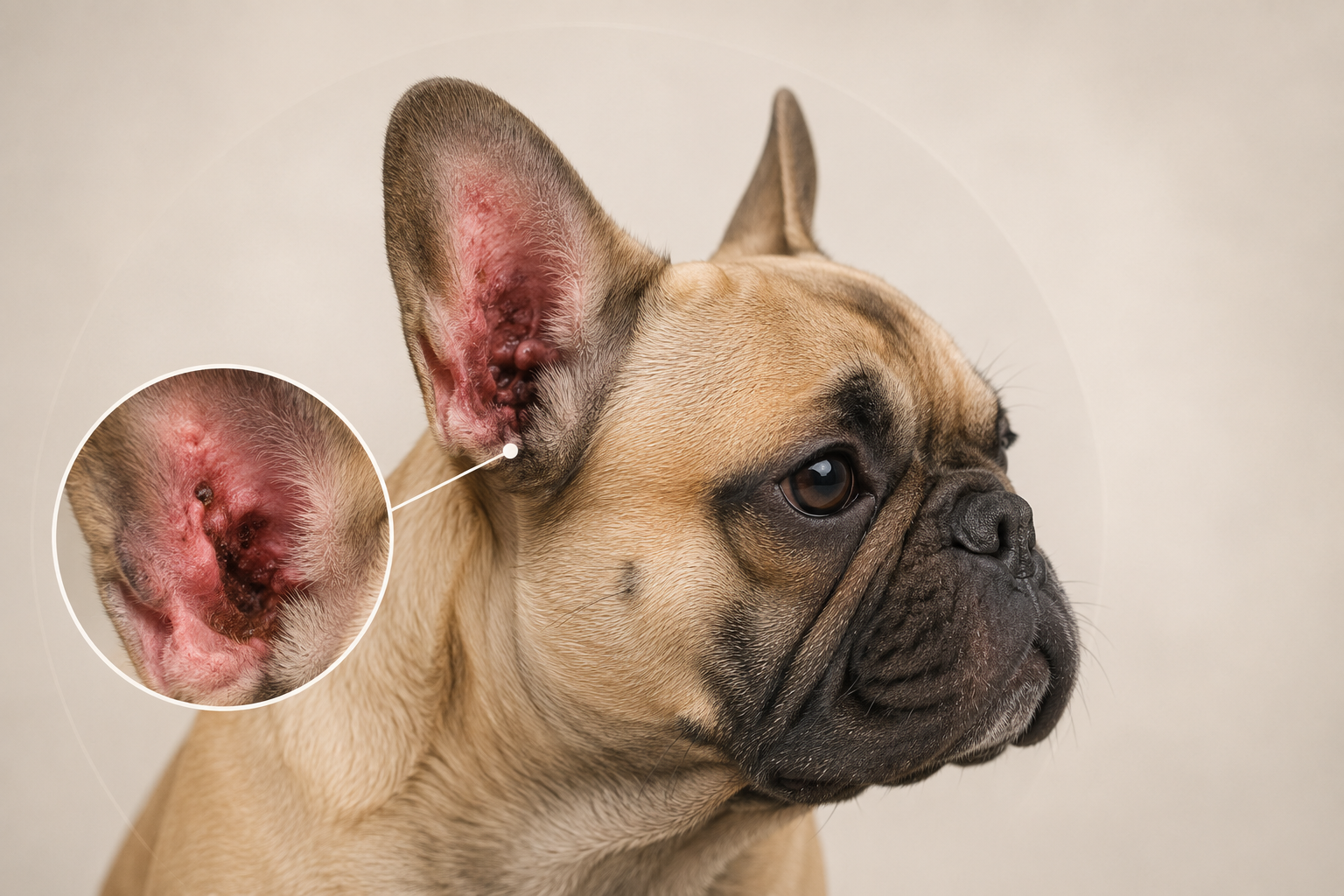
    French Bulldog with reddened ear and close-up detail showing signs of otitis
    This guide is for informational purposes only and does not replace a veterinary consultation.

    What is otitis?

    Otitis is an inflammatory process affecting one or more parts of the ear. In dogs, the most common form is otitis externa, which involves the ear flap and the external ear canal — the portion between the ear opening and the eardrum.

    The inflammation can cause itching, pain, redness, swelling, unpleasant odour, and abnormal discharge or wax production. It may affect one or both ears and can present as acute, recurrent, or chronic.

    It is important not to regard every case of otitis simply as an infection. Bacteria and yeasts can proliferate in the inflamed canal, but there is often an underlying primary cause, such as an allergy, a foreign body, a parasite, or impaired ventilation and altered conditions within the ear canal.

    Reducing symptoms alone is therefore not enough to prevent recurrence: the underlying cause that triggered the inflammation must also be identified and managed.
    At a glance

    Area affected

    Otitis externa involves the ear flap and the external ear canal down to the eardrum.

    Not always just an infection

    Bacteria and yeasts can complicate otitis, but an underlying primary cause often needs to be identified.

    Can become recurrent

    If the underlying cause is not managed, the inflammation may recur or become chronic.

    Requires veterinary diagnosis

    The appearance or odour of discharge alone are not enough to determine the cause or choose the correct treatment.

    Types of otitis

    Otitis is classified according to the part of the ear affected. The distinction between external, middle, and internal otitis is important because it changes the depth of the problem, the possible symptoms, the investigations needed, and the veterinary treatment.

    The most common form

    Otitis externa

    Involves the ear flap and the external ear canal down to the eardrum. It can cause itching, head shaking, redness, pain, unpleasant odour, and increased wax or discharge.

    The inflammation may be triggered by allergies, foreign bodies, parasites, moisture, or changes in the canal environment. Bacteria and yeasts may proliferate secondarily.

    It is the form most frequently observed in dogs.

    Involves the middle ear

    Otitis media

    Involves the cavity located beyond the eardrum. It may develop as a complication of persistent otitis externa or following other ear conditions.

    Symptoms can include more marked pain, discomfort when opening the mouth, head shaking, and persistent discharge. In some cases, external signs may be minimal.

    It cannot be diagnosed by observing the outer ear alone.

    The deepest form

    Otitis interna

    Involves the structures of the inner ear, which are also responsible for balance. It is less common but can cause neurological or vestibular symptoms.

    Possible signs include head tilt, loss of balance, involuntary eye movements, disorientation, or difficulty walking.

    Requires prompt veterinary assessment.

    Persistent head tilt, loss of balance, abnormal eye movements, severe pain, or rapid worsening require prompt veterinary assessment.

    Why is the French Bulldog predisposed?

    In the French Bulldog, otitis rarely depends on a single factor. The predisposition may arise from a combination of allergies, skin inflammation, individual characteristics of the ear canal, and conditions that favour the accumulation of wax, moisture, and micro-organisms.

    Not every Frenchie will develop otitis, but in predisposed individuals the problem can become recurrent if the primary cause is not identified and managed.

    Allergies and atopic dermatitis

    Environmental and food allergies can inflame the skin of the ear canal. In some dogs, recurrent otitis may be one of the first or main signs of an allergic disease.

    When inflammation persists, the canal becomes more favourable to the proliferation of yeasts and bacteria.

    Otitis may be linked to the same allergic process that causes skin itching and paw licking.

    Atopic dermatitis in the French Bulldog

    Ear canal anatomy

    The dog's ear canal has an angled, poorly ventilated shape. In some individuals it may be particularly narrow, inflamed, or rich in folds, making it harder for wax and moisture to drain naturally.

    These conditions do not necessarily cause otitis on their own, but can favour its onset or persistence.

    Upright ear shape does not automatically protect against otitis.

    Sensitive skin barrier

    The surface of the ear canal is lined with skin. If this barrier is irritated or damaged, wax production increases and the normal balance of the ear is disrupted.

    Chronic inflammation can cause thickening, narrowing of the canal, and greater difficulty with ventilation and cleaning.

    The ear must be considered part of the skin, not an isolated structure.

    Yeasts, bacteria and moisture

    Small quantities of micro-organisms may be present even in a healthy ear. When the canal is inflamed, moist, or full of wax, yeasts and bacteria can multiply and worsen symptoms.

    Bathing, swimming, incomplete drying, or unsuitable products may contribute to altering the ear microenvironment.

    Bacteria and yeasts are often secondary factors, not necessarily the initial primary cause.

    A multifactorial problem

    To understand why an otitis keeps recurring, the vet must evaluate not only what is present in the canal at that moment, but also the factors that initiated, favoured, and maintained the inflammation.

    Treatment that temporarily eliminates yeasts or bacteria may not be sufficient if the allergy, moisture, foreign body, or other underlying cause remains present.

    Symptoms of otitis

    The symptoms of otitis can appear suddenly or develop gradually over time. Some dogs show only mild discomfort, while others display evident pain and changes in behaviour.

    Recognising these signs early allows intervention before the inflammation becomes more severe or recurrent.

    Frequent head shaking

    One of the most common signs. The dog tries to relieve the discomfort caused by inflammation of the ear canal.

    Scratching the ears

    The itching may be continuous or appear only at certain times of the day.

    Redness

    The ear flap or the entrance to the canal may appear redder than normal.

    Unpleasant smell

    A strong odour coming from the ear may indicate significant alteration of the ear microenvironment.

    Wax or discharge

    The quantity, colour, and consistency of earwax may change in the presence of inflammation.

    Pain on contact

    Some dogs avoid being touched on the head or react when the ear is handled.

    Head tilt

    May appear especially in more significant cases or when deeper ear structures are involved.

    Behavioural changes

    The dog may be more irritable, less active, or show discomfort during rest.

    Note

    The presence of one or more symptoms does not allow the cause of otitis to be established. Allergies, yeasts, bacteria, foreign bodies, or other problems can produce very similar presentations. This is why a veterinary evaluation is important.

    Observe the possible signs

    Select the points on the image to learn about some of the signs that may appear in the presence of ear inflammation.

    This representation is for educational purposes. The external appearance of the ear alone is not enough to identify the cause or depth of the otitis.

    Image of a French Bulldog with indicators of possible otitis signs

    Select a sign to learn more

    What the image cannot show

    An ear may be painful or inflamed even when it appears almost normal from the outside. Additionally, the image does not allow evaluation of the eardrum, middle ear, inner ear, or micro-organisms present in the ear material.

    A veterinary examination, otoscopy, and analysis of material collected from the ear may be required to identify the cause.

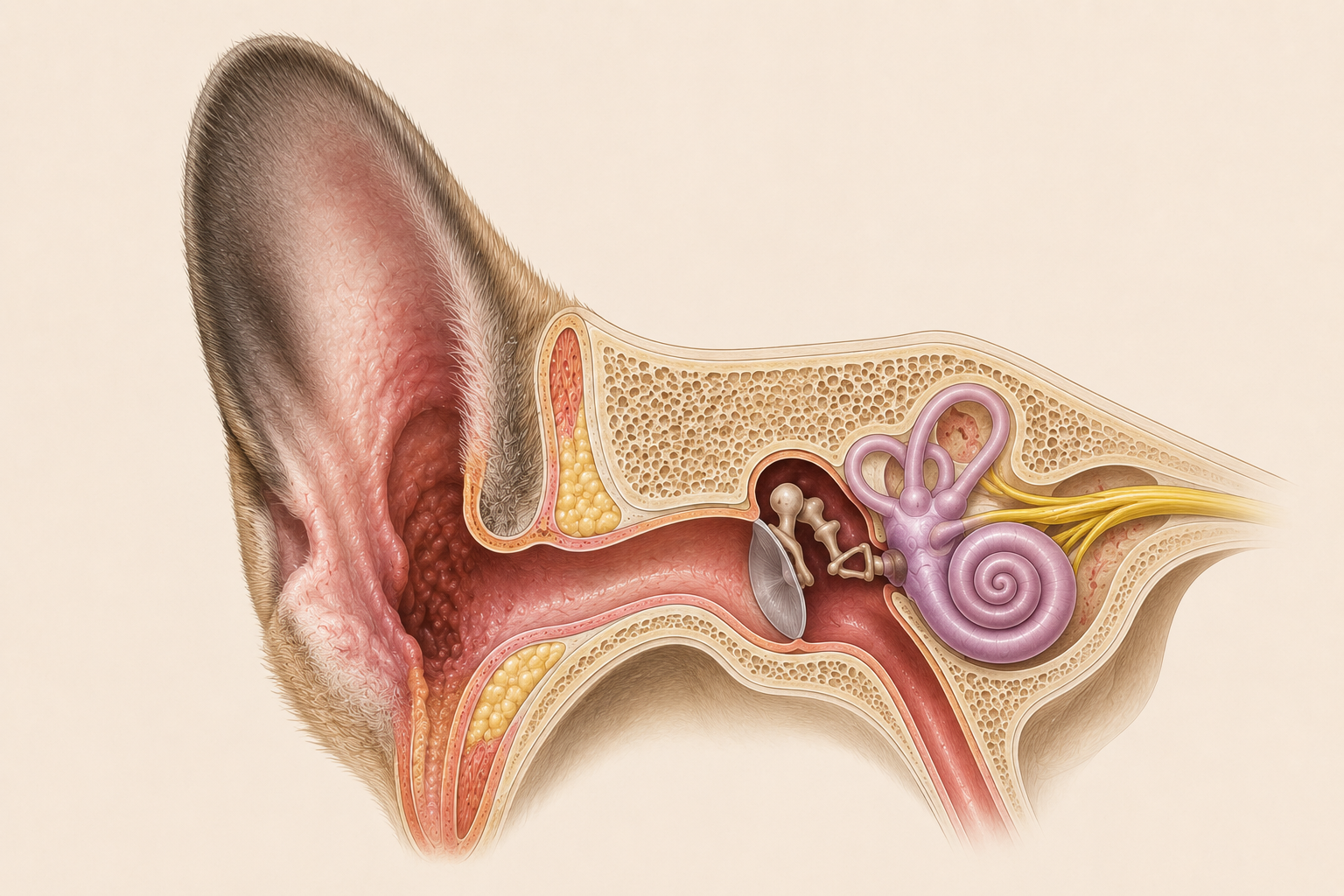
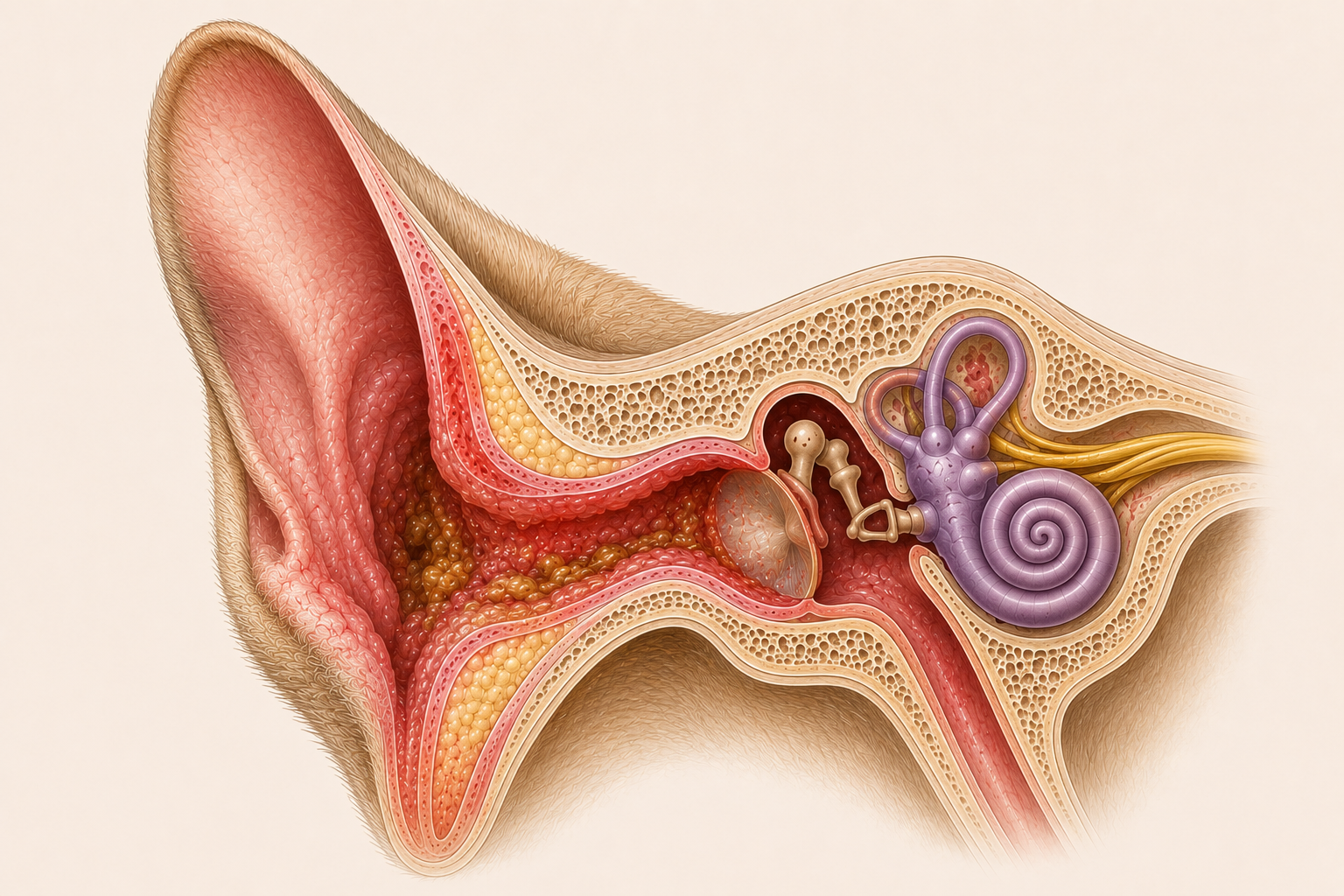
    Anatomy of the French Bulldog's Ear

    Understanding ear anatomy helps explain why some cases of otitis remain superficial while others can extend to deeper structures.

    Observe the comparison between a healthy ear and an ear with otitis. Select the points on the images to discover the different anatomical structures and what changes during inflammation.

    Healthy ear
    Anatomical cross-section illustration of a healthy dog ear
    Ear with otitis
    Anatomical cross-section illustration of a dog ear with otitis

    Select a structure to learn more

    What changes during otitis?

    CanalIn a dog with otitis the canal may become narrower due to inflammation.
    WaxIt can increase in amount and change colour and consistency.
    EardrumInflammation and secretions may make it more difficult to observe during examination.
    ExtensionIf the problem progresses beyond the eardrum, the middle and inner ear may also be involved.

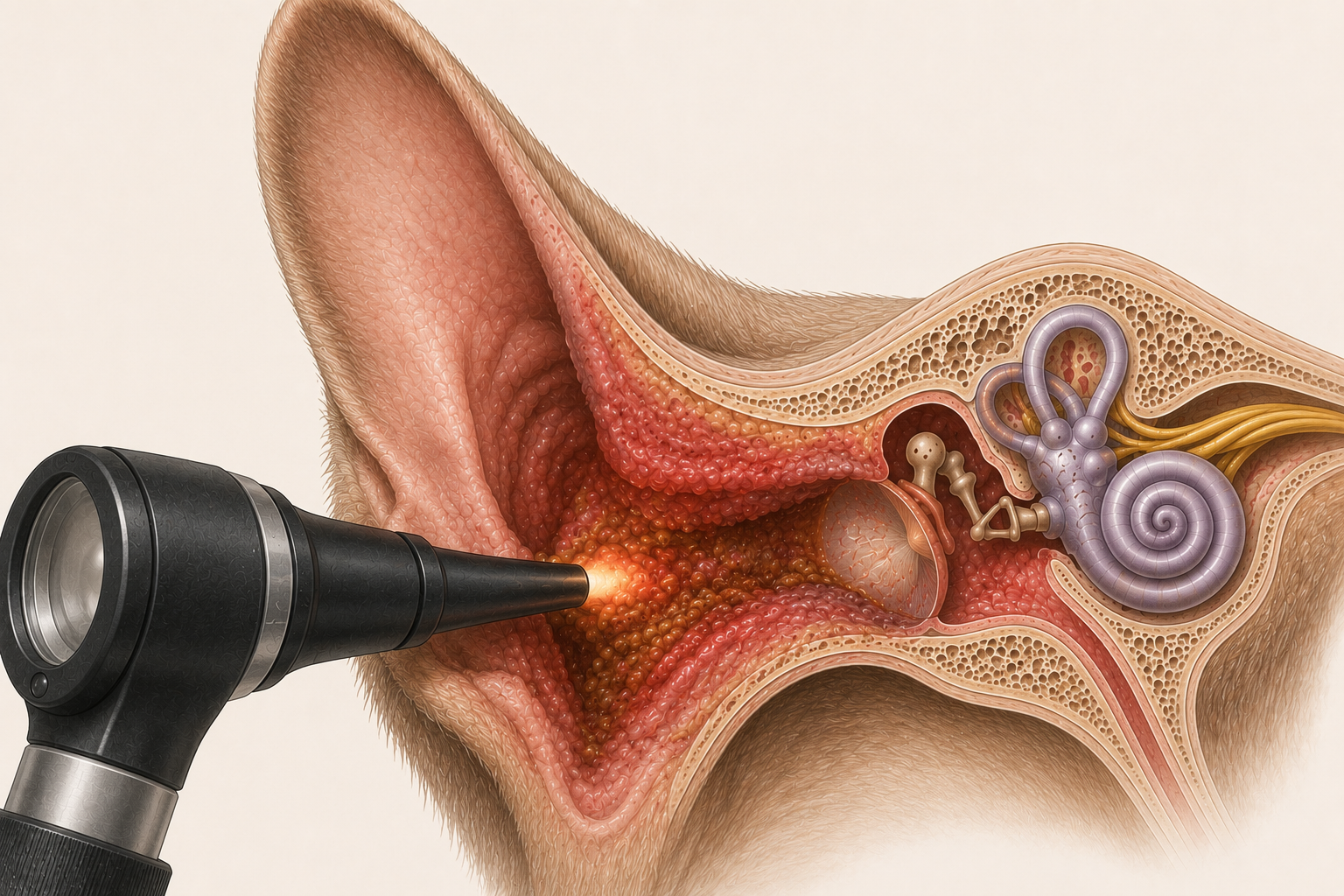
    Veterinary diagnosis

    Identifying the cause of otitis requires more than simply observing the external appearance of the ear.

    During the examination, the vet may use several diagnostic tools to assess the ear canal, the eardrum, and the material present in the ear. This makes it possible to determine not only whether otitis is present, but also its likely cause and the most appropriate treatment.

    Illustration of an otoscope inserted into a dog's ear with otitis, detailed cross-section of the ear canal and eardrum

    Select an area to learn more

    Clinical examination

    Before examining the ear, the vet gathers information about the symptoms, their duration, and any possible allergies or skin conditions.

    Otoscopy

    The otoscope allows exploration of the ear canal and observation of the eardrum when conditions permit.

    Ear cytology

    A sample of earwax is examined under a microscope to identify yeasts, bacteria, and inflammatory cells. This is one of the most useful tests for choosing the right treatment.

    Additional tests

    In more complex cases, further investigations may be needed, such as culture tests, imaging, or searching for the primary cause, for example allergies or other conditions.

    Why is cytology important?

    The appearance of earwax alone does not reliably indicate which micro-organisms are present.

    Cytology allows direct microscopic examination of the ear material and is one of the most useful tools for guiding targeted treatment.

    Important

    Applying products or thoroughly cleaning the ear before the appointment may alter the ear material and make it more difficult to interpret the results.

    Where possible, it is best to follow the vet's instructions.

    Treating otitis

    Treatment for otitis depends on the cause of the inflammation and the results of the veterinary examination.

    There is no one-size-fits-all therapy: two dogs with similar symptoms may require completely different treatments.

    The goal is not only to relieve symptoms, but also to address the primary cause in order to reduce the risk of recurrence.

    Ear canal cleaning

    When recommended by the vet, cleaning the ear canal helps remove wax and discharge, improving the effectiveness of treatment. The technique and product must be chosen based on the condition of the ear.

    Topical medications

    Many cases of otitis are treated with ear preparations containing one or more active ingredients, chosen based on the cause identified during the examination. The choice of medication depends on the clinical picture and the tests performed.

    Primary cause management

    If otitis is linked to allergies, atopic dermatitis, parasites, or other conditions, it is important to also treat the underlying problem to reduce the risk of further inflammation.

    Follow-up checks

    In more significant or recurrent cases, follow-up appointments may be needed to assess the response to treatment and check for any remaining inflammation.

    Why does otitis sometimes come back?

    In many cases the problem is not that the medication 'didn't work', but that the primary cause has persisted.

    If allergies, canal changes, or other predisposing factors are not managed, otitis may recur over time.

    Important

    Do not use ear drops, cleansers, or other products without veterinary guidance.

    Some medications are not suitable for all types of otitis and, if the eardrum is damaged, certain products may be contraindicated.

    Prevention

    Not all cases of otitis can be prevented, but some simple precautions can help reduce the risk of inflammation and recurrence, especially in predisposed dogs.

    Prevention does not mean using cleaning products frequently, but keeping the ear in good condition and recognising any changes early.

    Check the ears regularly

    Periodically examining the inside of the ear allows early detection of redness, increased wax, or other changes.

    Keep the ears dry

    After bathing or swimming, it is important to gently dry the outer part of the ear to prevent moisture from remaining in the canal.

    Manage allergies

    In allergic dogs, controlling the underlying condition is one of the most effective ways to reduce the recurrence of otitis.

    Avoid unnecessary cleaning

    Cleaning the ears too frequently or using unsuitable products can disrupt the normal balance of the ear canal.

    Keep up with vet check-ups

    In dogs with recurrent otitis, periodic check-ups can be useful to confirm that the inflammation has fully resolved.

    Act at the first signs

    Head shaking, itching, bad odour, or increased wax should not be ignored, especially in predisposed dogs.

    What NOT to do

    • Do not use cotton buds inside the ear canal.
    • Do not apply products without veterinary guidance.
    • Do not stop a course of treatment before the recommended end date.
    • Do not ignore recurrences assuming they will resolve on their own.

    Remember

    The most effective prevention is identifying and managing the primary cause of otitis.

    In French Bulldogs, this often means properly managing allergies, atopic dermatitis, or other predisposing conditions.

    Atopic dermatitis in the French Bulldog

    When to contact the vet

    A timely check-up can prevent an initial inflammation from developing into a more serious problem.

    If your French Bulldog shows one or more of the following signs, it is advisable to contact your vet.

    Frequent head shaking

    Repeated head shaking may indicate pain, itching, or discomfort inside the ear canal.

    Strong odour

    An unpleasant smell coming from the ear may be associated with inflammation or infection and warrants a veterinary assessment.

    Obvious pain

    If the dog whimpers when its ears are touched, avoids contact, or reacts in an unusual way, a veterinary examination is recommended.

    Discharge or excessive wax

    The presence of excessive wax, discharge, or abnormal material requires a check-up to identify the cause.

    Loss of balance or head tilt

    A persistent head tilt, loss of balance, or difficulty walking may indicate deeper ear involvement and require a veterinary visit as soon as possible.

    Frequent recurrences

    If otitis keeps coming back, it is important to identify the primary cause rather than just treating the symptoms.

    When is it urgent?

    • Sudden severe pain.
    • Loss of balance.
    • Persistent head tilt.
    • Sudden reduction in hearing.
    • Heavy discharge of blood or pus.
    • Rapid deterioration of general condition.

    If any of these signs are present, it is advisable to contact the vet without delay.

    Remember

    Acting in the early stages of otitis often makes management easier and reduces the risk of complications and recurrences.

    Frequently asked questions