
Atopic Dermatitis
Atopic Dermatitis · Atopische Dermatitis · Dermatitis Atópica · Dermatite Atopique
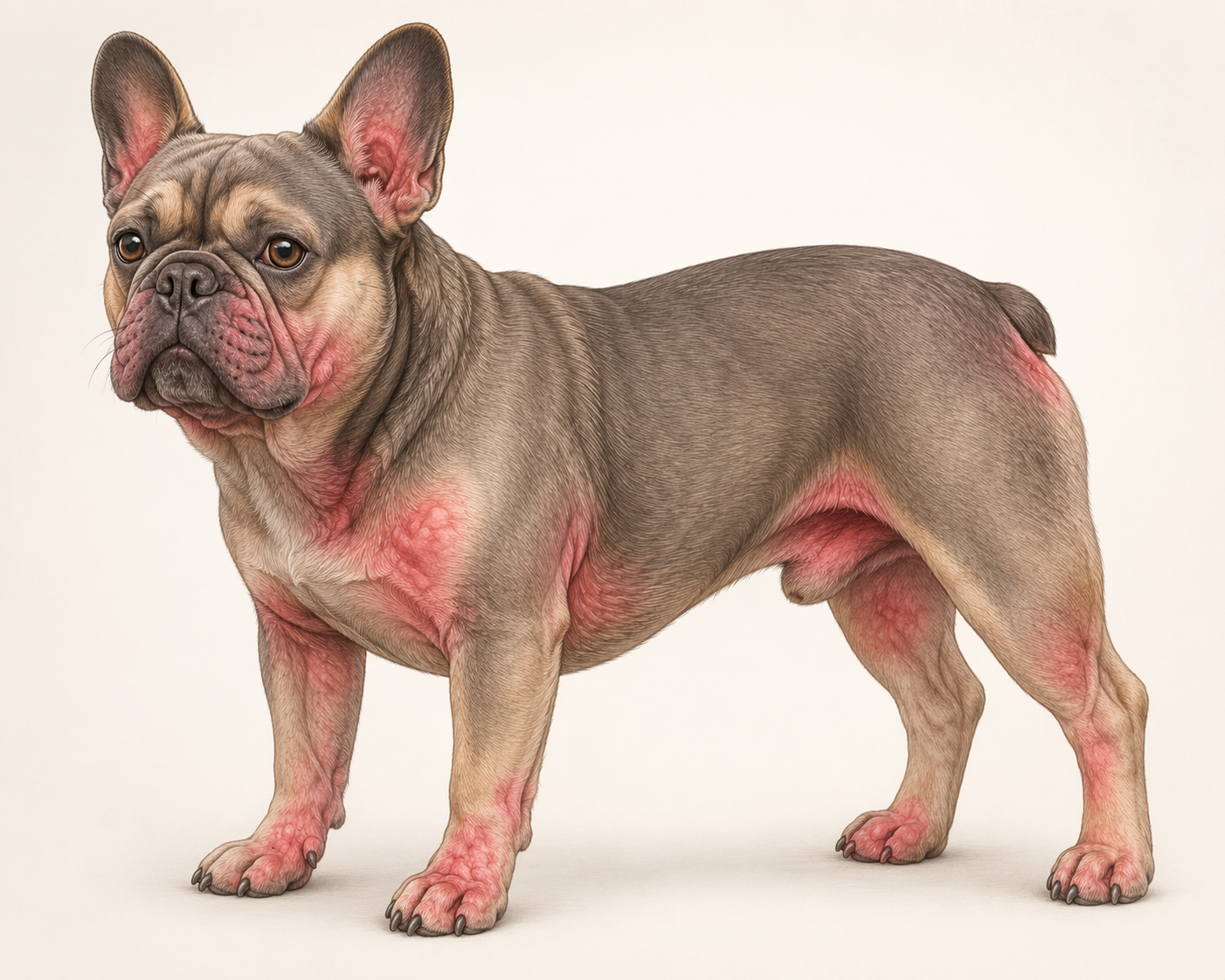
Atopic dermatitis is the most common chronic skin inflammation in French Bulldogs, with an allergic origin. It affects the skin, skin folds, and interdigital spaces, causing intense itching and persistent discomfort.
What is atopic dermatitis?
Canine atopic dermatitis is a chronic inflammatory skin disease caused by a genetic predisposition and an abnormal immune response to environmental allergens. It is not contagious and is not caused by poor hygiene.
In the French Bulldog, it is one of the most common dermatological conditions. This breed has a more fragile skin barrier than other dogs, making it easier for allergens such as dust mites, pollens, moulds, and other environmental substances to penetrate the skin.
The main symptom is persistent itching. Many dogs begin scratching, licking, or chewing themselves long before any visible skin lesions appear. Over time, the constant trauma from scratching can lead to redness, hair loss, skin thickening, and bacterial or yeast infections.
Atopic dermatitis is a chronic condition: there is currently no definitive cure, but in most cases it can be effectively managed through early diagnosis, targeted therapies, and consistent long-term care. The goal of treatment is to reduce itching, preserve the skin barrier, and improve the dog's quality of life.
At a glance
- Chronic inflammatory skin condition.
- Very common in the French Bulldog.
- The main symptom is persistent itching.
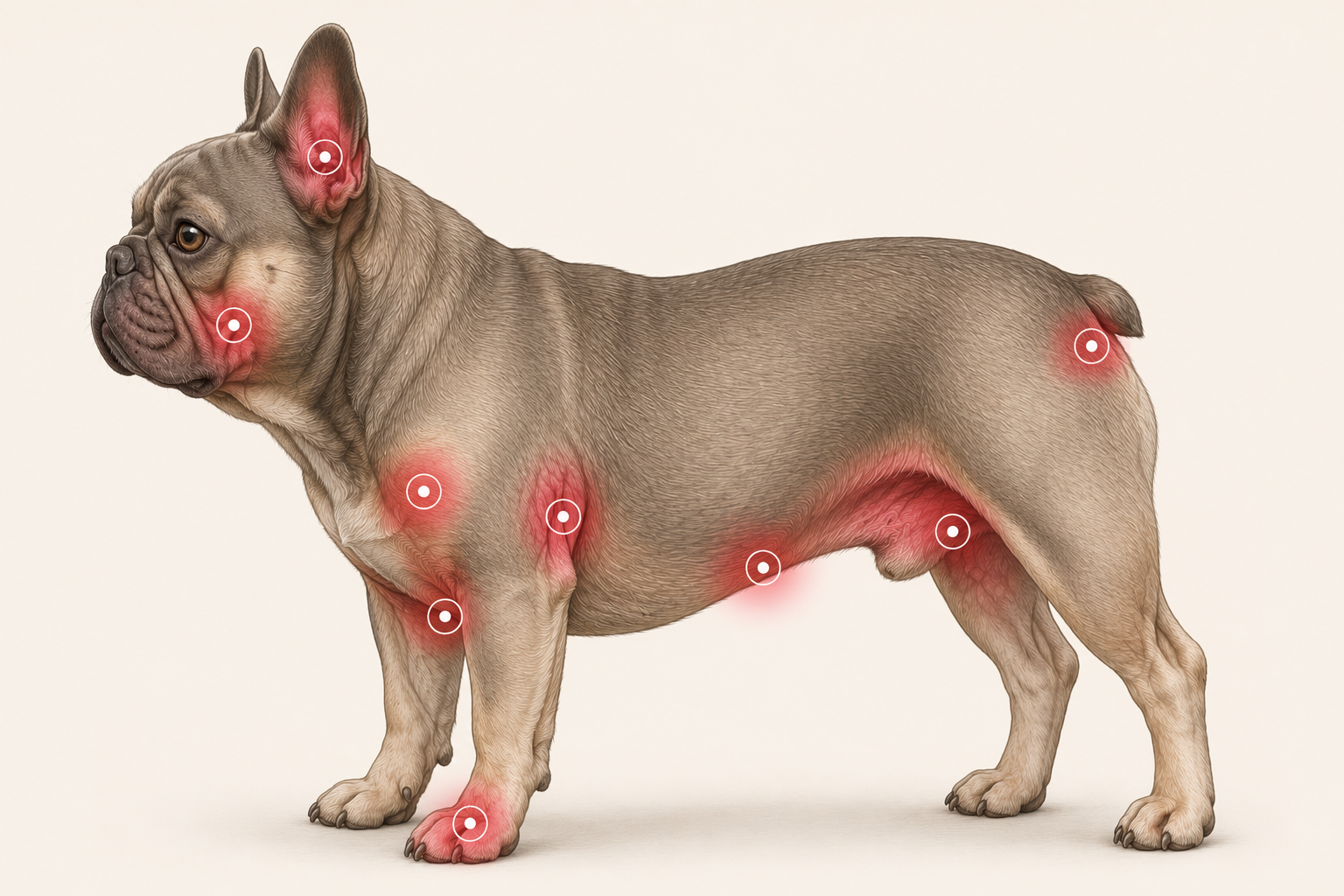
- Most commonly affects ears, muzzle, armpits, abdomen, groin, and paws.
- Can lead to recurrent ear infections and secondary skin infections.
- Not contagious.
- Requires ongoing long-term management.
- With appropriate treatment, many dogs lead a normal life.
Why is the French Bulldog predisposed?
Atopic dermatitis does not stem from a single cause. It develops through the interaction of genetic predisposition, impaired skin barrier function, an overactive immune response, and contact with environmental allergens.
In the French Bulldog, breed-related predisposition increases the risk of developing allergic skin problems. This does not mean every Frenchie will become atopic, but some individuals may react to allergens more readily than other dogs.
A less effective skin barrier
The outermost layer of the skin acts as a protective barrier: it limits water loss and blocks the entry of irritants, microorganisms, and allergens.
In dogs with atopic dermatitis this barrier can be impaired. Allergens can therefore penetrate the skin more easily and come into contact with the immune system. The skin also tends to lose moisture more readily, becoming more vulnerable to dryness, irritation, and inflammation.
An overactive immune response
When the immune system mistakenly identifies normally harmless substances — such as pollens, dust mites, or moulds — as dangerous, it can trigger a disproportionate inflammatory response.
This reaction causes itching and inflammation. The dog scratches, licks, or chews itself, further damaging the skin and feeding a vicious cycle.
Skin folds, moisture, and friction
Facial and body folds do not cause atopic dermatitis on their own, but they can complicate its management. Moisture, sebum, and debris can accumulate in these areas, while constant friction may increase irritation.
Already inflamed skin is also more prone to bacterial and yeast overgrowth, which can intensify itching and make targeted therapies necessary.
Ears and paws particularly vulnerable
In the atopic dog, the ears and paws are often among the first areas affected. Some dogs initially show recurrent ear infections, paw licking, or redness of the interdigital spaces, even when the rest of the skin still appears relatively normal.
Recognising these signs early allows intervention before inflammation becomes more widespread and harder to control.
Symptoms of atopic dermatitis
Atopic dermatitis can present differently from dog to dog. Some French Bulldogs initially show only mild itching, while others quickly develop skin inflammation, hair loss, and recurrent infections.
In the early stages, itching is often the only obvious symptom. The dog may begin scratching, licking, or chewing repeatedly even when the skin still looks normal.
Over time, inflammation becomes more apparent and a range of clinical signs can emerge.
Most common symptoms
- Persistent or intermittent itching.
- Constant paw licking.
- Chewing of the toes and interdigital spaces.
- Skin redness.
- Recurrent ear infections.
- Rubbing the muzzle on furniture or carpets.
- Frequent scratching of ears and neck.
- Hair loss in inflamed areas.
- Skin thickening in chronic cases.
- Dry or flaky skin.
- Unpleasant skin odour due to secondary infections.
- Crusts or small lesions caused by scratching.
Itching is not always continuous
Many owners assume that an atopic dog must scratch non-stop all day long. In reality, itching can vary considerably.
It may worsen during certain seasons, after a walk, in the evening, or overnight. Some dogs have periods of apparent improvement followed by new flare-ups.
When dermatitis worsens
If itching is not controlled, the constant licking and scratching further damage the skin.
This encourages the growth of bacterial and yeast infections (Malassezia), which intensify itching and make the disease harder to manage.
For this reason it is important to intervene early and not wait for skin lesions to become widespread.
Most commonly affected body areas
Hover or tap an area to highlight it
How is atopic dermatitis diagnosed?
There is no single test that can definitively diagnose atopic dermatitis. Diagnosis is based primarily on the clinical examination, the dog's history, and the exclusion of other diseases that can cause itching.
For this reason, the vet follows a stepwise diagnostic process, evaluating symptoms, age of onset, distribution of lesions, and response to previous treatments.
Main diagnostic steps
- 1
Clinical examination
The vet carefully examines the skin, ears, and coat, assessing the type of lesions and the body areas involved.
- 2
Parasite exclusion
Fleas, mites, and other parasites can cause symptoms very similar to atopic dermatitis. Ruling out these causes is essential before confirming the diagnosis.
- 3
Infection exclusion
Bacterial infections and those caused by the yeast Malassezia can increase itching and worsen inflammation. Cytological examination of the skin or ear wax is often performed to identify them.
- 4
Assessment of possible food allergies
In some cases the vet may recommend an elimination diet lasting several weeks to determine whether itching is caused by a food reaction.
- 5
Confirmation of atopic dermatitis
Only after ruling out all other possible causes of itching and evaluating the overall clinical picture can a diagnosis of atopic dermatitis be made.
Do allergy tests help with diagnosis?
Allergy tests are not used to determine whether a dog is atopic.
They can however be useful after diagnosis to identify the allergens involved and assess the suitability of allergen-specific immunotherapy (desensitisation).
For this reason, allergy tests must be interpreted by the vet in the context of the dog's clinical history.
How is atopic dermatitis treated?
Atopic dermatitis cannot be permanently cured, but in most cases it can be effectively controlled with a personalised treatment plan.
There are many therapies that can effectively control itching, reduce inflammation, and significantly improve quality of life. The choice of treatment depends on symptom severity, individual response, and the presence of any secondary infections.
Treatment is tailored by the vet based on the severity of the disease, the dog's age, the presence of secondary infections, and the response to previous therapies.
Itch control
Reducing itching is one of the primary goals of treatment. Depending on the case, the vet may prescribe specific medications that quickly reduce itching and inflammation.
Among the most commonly used treatments are drugs such as oclacitinib, lokivetmab, and, in selected situations, corticosteroids.
Managing secondary infections
When the skin is damaged, bacteria and yeasts can proliferate easily, worsening itching.
In these cases the vet may prescribe medicated shampoos, topical treatments, or antibiotics and antifungals when genuinely necessary.
Restoring the skin barrier
Keeping the skin well moisturised helps strengthen the skin barrier and reduce allergen entry.
For this reason, gentle shampoos, mousses, moisturising sprays, or other products specifically formulated for atopic skin may be recommended.
Allergen-specific immunotherapy
When the responsible allergens are identified, some dogs can benefit from allergen-specific immunotherapy, also known as desensitisation.
This treatment does not act immediately, but can progressively reduce the allergic response and decrease the need for other medications over the long term.
A treatment to adapt over time
Atopic dermatitis changes throughout the dog's life. For this reason, the treatment plan may be modified over time according to symptoms, seasons, and individual response.
Regular check-ups with the vet are essential to keep the disease under control and to intervene quickly in the event of flare-ups.
Daily management of atopic dermatitis
Daily care does not replace veterinary treatment, but is essential for reducing flare-ups and keeping the skin healthy.
The treatment prescribed by the vet is the cornerstone of management, but daily care also plays a fundamental role in keeping the skin in good condition and reducing the risk of flare-ups.
Consistent management helps protect the skin barrier, limit allergen exposure, and detect any deterioration early.
Clean paws after walks
The paws are in constant contact with pollens, dust, grass, and other substances that can worsen itching.
After every walk it is advisable to gently clean the paws and interdigital spaces with water or vet-recommended products, making sure to dry the skin thoroughly.
Keep skin folds clean
The folds of the muzzle and body can trap moisture and debris.
Regular cleaning with gentle products and thorough drying helps reduce the risk of irritation and infection.
Use specific shampoos
Shampoos formulated for dogs with atopic dermatitis can help moisturise the skin, strengthen the skin barrier, and reduce allergens on the coat.
The frequency of baths should be determined together with the vet.
Regularly check ears and skin
Frequently check for redness, unpleasant odour, increased ear wax, hair loss, or new lesions.
Spotting these signs early allows intervention before the problem worsens.
Always follow the treatment plan
Even when the dog seems to be doing well, do not discontinue medications or treatments without consulting the vet.
Atopic dermatitis tends to have periods of improvement alternating with flare-ups, and changing the therapy on your own can trigger a return of symptoms.
When to contact the vet
Atopic dermatitis can be managed in most cases, but certain symptoms require a vet visit as soon as possible.
Recognising a deterioration early allows intervention before inflammation becomes more severe or secondary infections develop.
Contact the vet if your French Bulldog:
- Scratches or licks continuously for several hours a day.
- Shows widespread or sudden redness.
- Has wounds, crusts, or bleeding caused by scratching.
- Has an unpleasant smell coming from the skin or ears.
- Produces excessive ear wax or has recurrent ear infections.
- Shows pus, discharge, or moist patches on the skin.
- Limps or avoids putting weight on a paw due to pododermatitis.
- Itching worsens despite ongoing treatment.
- Stops eating, appears lethargic, or shows signs of pain.
Don't wait for the problem to get worse
Many owners tend to wait and see if the itching resolves on its own. However, uncontrolled dermatitis can worsen rapidly and encourage bacterial or yeast infections, making treatment longer and more complex.
Early intervention often makes it easier to control the disease and improve the dog's wellbeing.
Prognosis
Receiving a diagnosis of atopic dermatitis can worry many owners, but in most cases the prognosis is good. Thanks to advances in veterinary dermatology, it is now possible to effectively control itching and inflammation in most dogs.
With early diagnosis, a personalised treatment plan, and consistent management, many French Bulldogs lead long, active lives of excellent quality.
What influences the prognosis?
Response to treatment can vary from dog to dog. The main factors influencing how the disease progresses are:
- severity of the dermatitis;
- presence of secondary infections;
- consistency of treatment;
- identification and control of allergens;
- regular veterinary check-ups.
A condition to manage, not to fear
Atopic dermatitis requires ongoing attention, but it should not prevent the dog from living comfortably.
Working closely with the vet, following the treatment plan, and acting promptly during flare-ups will in most cases keep symptoms under control and improve the dog's wellbeing.
Frequently asked questions
No. Atopic dermatitis is not a contagious disease and cannot be transmitted to other dogs, other animals, or people.
No. There is currently no definitive cure. However, in most cases it is possible to effectively control itching and inflammation with a personalised therapy and proper daily management.
The most common sign is persistent itching, often accompanied by paw licking, recurrent ear infections, skin redness, and muzzle rubbing. Diagnosis must be made by a vet after ruling out other possible causes of itching.
Predisposition has a genetic component. Certain breeds, including the French Bulldog, have a higher risk of developing this disease than others.
No. They are two different conditions, although they can cause similar symptoms and, in some cases, occur in the same dog. The vet will distinguish between the two through the diagnostic process.
Yes, but using specific shampoos recommended by the vet and at the frequency most appropriate for the individual dog.
Not necessarily. With appropriate treatment, many dogs achieve excellent itch control and lead a normal life.
Yes. Recurrent ear infections are one of the most frequent manifestations of atopic dermatitis and, in some dogs, can be the first sign of the disease.
No. Allergy tests are not used to diagnose atopic dermatitis. They may be used afterwards to identify the responsible allergens and assess potential immunotherapy.
Whenever itching worsens, infections appear, there is unpleasant odour, pain, wounds, or symptoms do not improve with the current prescribed treatment.
Related symptoms
Related Emergency Guides
Scientific sources
The information on this page was written and reviewed using internationally recognised veterinary medicine guidelines and textbooks.
The main sources consulted include:
- International Committee on Allergic Diseases of Animals (ICADA)
- World Small Animal Veterinary Association (WSAVA)
- MSD Veterinary Manual
- Merck Veterinary Manual
- American College of Veterinary Dermatology (ACVD)
- British Small Animal Veterinary Association (BSAVA)
- Mueller RS, Olivry T, Prélaud P. Treatment of canine atopic dermatitis.
- International guidelines on the diagnosis and management of canine atopic dermatitis.
Scientific knowledge is constantly evolving. This page is updated periodically to reflect the most recent available evidence.
Veterinary disclaimer
The information on this page is for educational purposes only and does not in any way replace the clinical examination, diagnosis, or treatment prescribed by a veterinarian.
Every French Bulldog is a unique individual and may show different symptoms, disease severity, and responses to therapies.
If persistent itching, skin lesions, recurrent ear infections, or any other health problem is present, always consult your vet promptly.
FrenchieCarePro does not provide veterinary diagnoses or prescribe pharmacological treatments. Therapeutic decisions must always be made together with the veterinarian looking after your dog.